Measure the pool at the waterline, then add overhang to the deck or coping anchors. The planning range used on this page is 1 to 2 ft beyond each side for a debris cover, which is our own rule of thumb rather than a manufacturer specification. Size to the anchor line, not just the water surface.
A pool cover that is barely big enough will fight every wind gust. A cover that is far too large will puddle, drag, and become dangerous to handle when full of water.
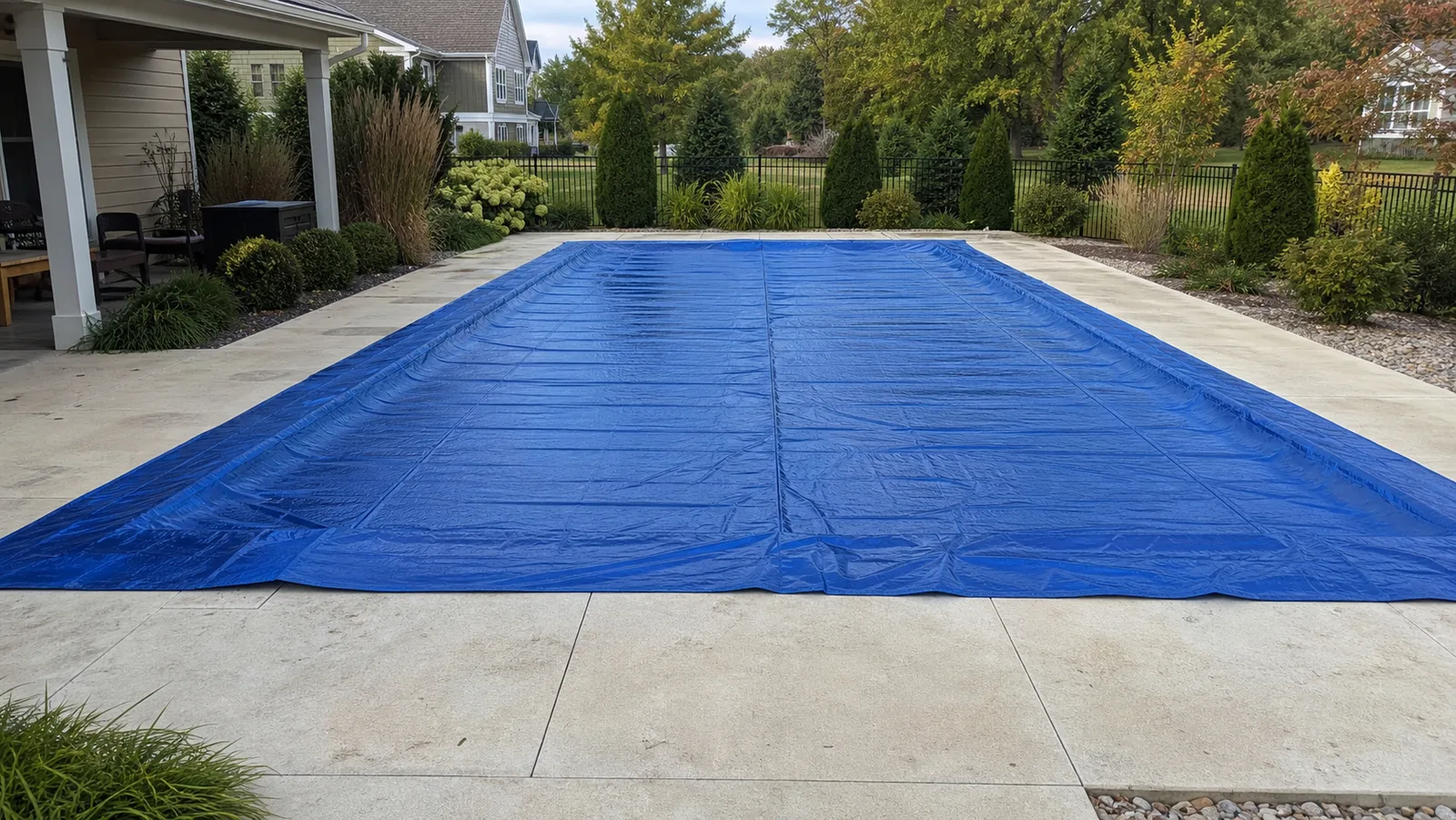
What a pool tarp is for
Homeowners use tarps to block leaves, reduce sunlight, and cut debris between swims or during shoulder seasons. That is different from a certified safety cover designed to support weight. Keep those jobs separate when you shop.
How to measure
- Measure length and width at the waterline for rectangular or oval pools.
- For round pools, measure the maximum diameter in two directions.
- Mark where the cover will actually be anchored on the deck.
- Add overhang from waterline to anchor line on every side.
- Check ladder cutouts, raised spas, handrails, and non-rectangular corners.
Planning examples
Each row is the waterline size with the planning range above applied to it — 1 to 2 ft added per side. That is arithmetic for orientation, not a stock size any supplier publishes.
| Pool shape | Waterline size | Planning cover size |
|---|---|---|
| Rectangular | 15 × 30 ft | About 17 × 32 to 19 × 34 ft |
| Rectangular | 18 × 36 ft | About 20 × 38 to 22 × 40 ft |
| Round | 24 ft diameter | About 26 to 28 ft square or larger |
Material choice
Heavier, more opaque covers stand up to wind and debris better and get harder to move when wet, so judge the cover against how you will handle it as well as how it blocks light. Opaque PE and coated fabrics block more light than clear sheets, which matters if you are trying to slow growth. If the cover will sit for months, plan drainage so rainwater does not form a deep pond in the center.
Safety notes
A debris tarp is not automatically a safety cover
Do not assume a hardware-store tarp can support a person or pet. If fall protection is required, use a cover system rated and installed for that purpose.
The overhang range and the material notes on this page are this site's planning guidance rather than a manufacturer specification: 1 to 2 ft per side is a rule of thumb applied to the waterline measurements in the table, and the wet-handling notes follow the same reasoning used on the pool cover calculator. The safety-cover distinction is a product category, not a size, and a tarp sized here is not a fall-protection device.
Frequently asked questions
Should a pool tarp be larger than the pool?
Yes. Add overhang beyond the waterline so the cover can be secured on the deck or coping. A cover cut exactly to the water shape is hard to anchor and easy to blow off.
Can I use a regular tarp as a winter pool cover?
A heavy tarp can work as a temporary debris cover, but it is not automatically a safety cover and may not handle standing water or long winter loads. Use a purpose-rated safety cover if fall protection is required.
How much overhang should I leave around a rectangular pool?
There is no single published number, so treat this as the planning rule used on this page: 1 to 2 ft beyond each side for a debris cover, and more when the anchors sit farther out on the deck. The measurement that settles it is the real anchor line, not the water edge, so mark where the cover will actually be tied off before you buy.
Round pool or oval pool: how do I size a square tarp?
Measure the maximum diameter or length and width, then choose a rectangular tarp that clears both dimensions plus overhang. Square tarps often waste fabric on round pools but still work if the overhang is managed.
Will a tarp keep algae out of the pool?
It reduces debris and sunlight, which helps, but water chemistry and circulation still matter. A cover is one control, not a complete maintenance plan.
How this guide was prepared
We separate geometry and unit conversions from product claims, use exact standards where available, and flag specifications that vary by manufacturer. See our editorial policy for the review process.